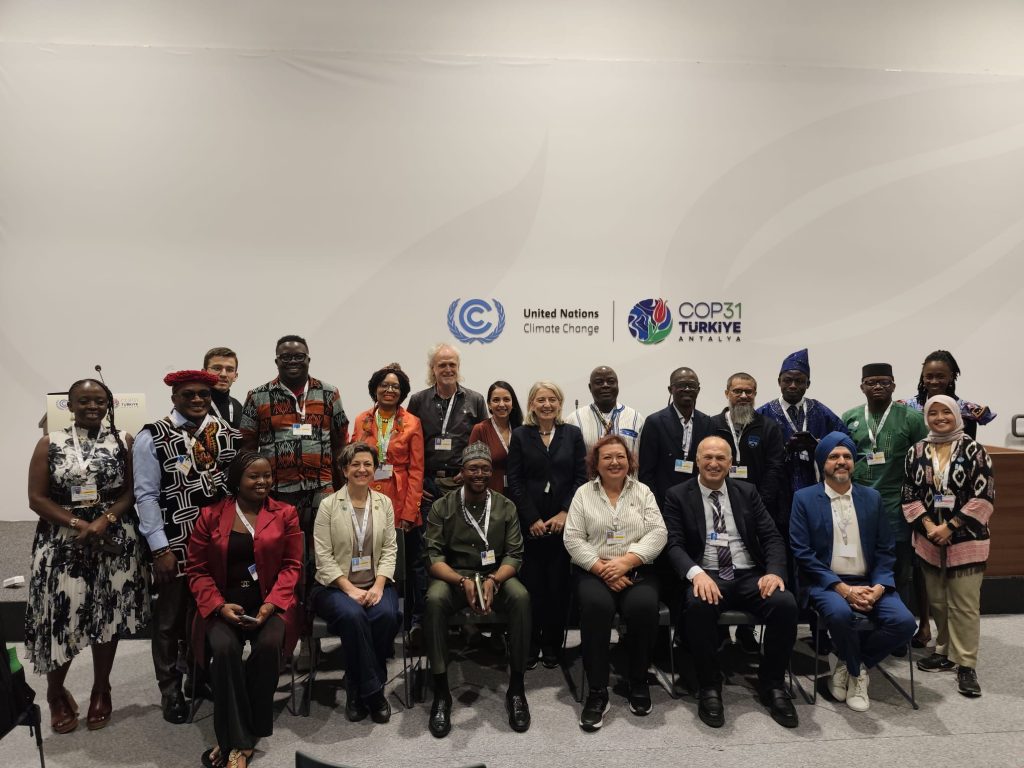
Antalya, Türkiye | 13 November 2026
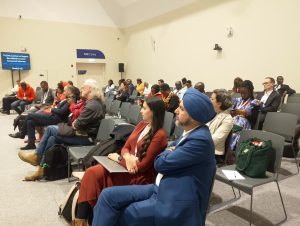
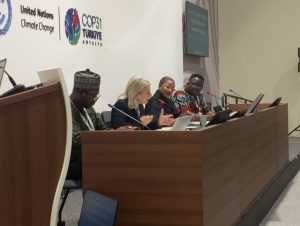
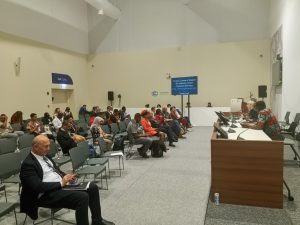
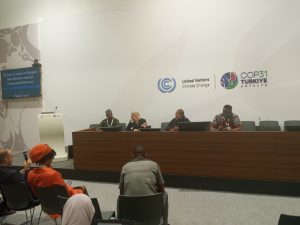
Connected Advocacy, through its Global Localization Forum, convened a high-level side event at the 31st United Nations Climate Change Conference (COP31), calling for global climate commitments to deliver tangible results for frontline communities. Held under the theme “The Global Localization Forum: Fixing Gaps in the Implementation of Climate Disaster Response and Energy Democracy,” the event brought together community leaders, civil society representatives, researchers, and climate advocates to examine how global policies can be translated into locally led action.
The Forum focused on strengthening climate resilience, disaster-risk reduction, ocean and coastal protection, and energy democracy across the Global North and Global South.
Despite increasingly ambitious international commitments, communities facing the most severe climate impacts are still frequently excluded from decision-making, financing, and implementation. Coastal erosion, sea-level rise, flooding, ocean pollution, biodiversity loss, displacement, and energy poverty are placing growing pressure on communities that have contributed the least to the climate crisis.
Connected Advocacy emphasized that localization must move beyond policy language. It must become a practical framework that transfers resources, authority, and accountability to the people and institutions closest to the challenges.
The event was moderated by Dr. Frances Roberts-Gregory of the HBCU Green Fund and Root to Flourish Collective, USA. Local Leadership, Finance, and Community Protection
Across five sessions, speakers examined the institutional and financial barriers limiting locally led climate action.
His Royal Majesty Fon Ngum IV, Paramount Ruler of the Oku Kingdom in Cameroon, opened the discussion by highlighting local leadership and the importance of Indigenous, traditional, and community knowledge in climate, ocean, and environmental governance.
A session on localization and climate finance considered how funding can reach communities more directly. Professor Giuliana Battisti of Warwick Business School and the Circular Economy Powered Renewable Energy Centre discussed barriers that prevent local actors from accessing climate finance. Gloria Majiga of Tax Justice Network Africa addressed climate tax justice, innovative financing, and the need to curb illicit financial flows.
Participants stressed that climate funding must be accessible, flexible, predictable, and long-term enough to help communities implement and scale their own solutions.
The experiences of frontline and coastal communities were presented by Sema Genel Karaosmanoğlu, founder of Support to Life, Türkiye, and Qarnar Igbal of Climate Alliance Pakistan and the Charter for Change Advocacy Working Group. Their contributions underscored the role of local communities as first responders, despite their limited access to resources and decision-making authority.
A session on energy democracy and the just transition featured Yomar Elmawi of the Africa Movement of Movements, Seruni Salsabila of UNIDO’s Energy and Climate Action Youth Advisory Group, and Gunter Hermeyer, Senior Campaign Manager for “Nuclear Power Is Not the Answer.”
The speakers shared perspectives from Africa, Indonesia, and Germany on clean-energy access, community-led renewable energy, and public participation in energy-transition planning. The session reinforced a central principle: energy policies must be designed with communities, not imposed on them.
In the final session, Kulkiran Shah Jagdev, Environment Officer at the Sikh Human Rights Group, examined how international agreements can be translated into national and subnational action that reflects community priorities.
Our key ASKS to Action for COP31:The Forum’s adopted five critical calls to action were presented by Prince Israel Orekha, a RISE UP Ocean Fellow.
- Climate finance must reach communities: Climate finance must move beyond intermediary-heavy systems and reach grassroots organizations, local institutions, and community-led initiatives. Funding must be accessible, flexible, predictable, and sufficiently long-term to sustain locally led solutions.
- Urgent action is needed on 1.5°C and a fossil fuel-free ocean: The international community must accelerate emissions reductions, minimize temperature overshoot, and pursue an equitable transition away from fossil fuels. This includes ending new offshore oil and gas exploration, progressively phasing out existing production, and protecting marine ecosystems and coastal livelihoods.
- Blue NDCs must protect oceans and coastal communities: Nationally Determined Contributions must give greater recognition to ocean and coastal priorities. Governments should strengthen commitments to protect marine ecosystems, restore biodiversity, support sustainable fisheries, and safeguard coastal livelihoods through meaningful community participation.
- Gender justice must be central to climate action: Climate policies must address structural gender inequalities and recognize the rights, leadership, knowledge, and contributions of women and people of all genders. Their meaningful participation must be guaranteed in governance, resource allocation, resilience planning, and decision-making.
- International agreements must deliver local results: Global climate and environmental agreements must produce measurable national and subnational action. Governments and development partners must strengthen local institutions, reform implementation systems, and establish transparent mechanisms connecting international commitments with community realities.
From Global Promises to Local Power
Connected Advocacy called for communities to be recognized not merely as beneficiaries, but as decision-makers, knowledge holders, and implementation partners.
Its co-creation approach is built around four processes: listening to community knowledge and lived experience; co-designing policies, solutions, and budgets; co-deciding through meaningful representation and decision-making rights; and co-delivering through local partnerships, direct financing, and shared accountability.
The Global Localization Forum also seeks to build a coordinated trust platform connecting frontline communities, civil society organizations, governments, development partners, researchers, youth movements, and international institutions. The platform will support collective learning and coordinated advocacy for locally led climate action.
Connected Advocacy calls on governments, climate finance institutions, multilateral development banks, United Nations agencies, civil society networks, and community leaders to move from commitments to coordinated implementation.
The message from the Global Localization Forum is clear: Nothing about implementation without communities, and no localization without resources, Leadership, and accountability. Localization must become a measurable commitment to transferring power, resources, and opportunities to those closest to the challenges.
People First. Local Action. Shared Responsibility.
About Connected Advocacy
Connected Advocacy is a community-based nonprofit organisation working to amplify underserved voices and strengthen inclusive locally led leadership, climate Ocean Protection, energy democracy , and, community resilience for sustainable development.
Through its local to global advocacy, partnerships and community engagement initiatives, Connected Advocacy works to advance locally led solutions, strengthen institutional accountability and ensure that frontline communities, young people, women and other underserved groups meaningfully participate in shaping policies and decisions that affect their lives.
The organisation convenes the Global Localization Forum as a platform for strengthening collaboration, knowledge exchange and collective advocacy for locally led climate Ocean Protection, environmental and energy democracy
Media, Partnership, and Collaboration Enquiries
Connected Advocacy
Website: www.connectedadvocacy.org.ng
Email: info@connectedadvocacy.org.ng