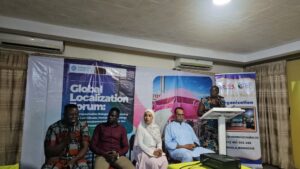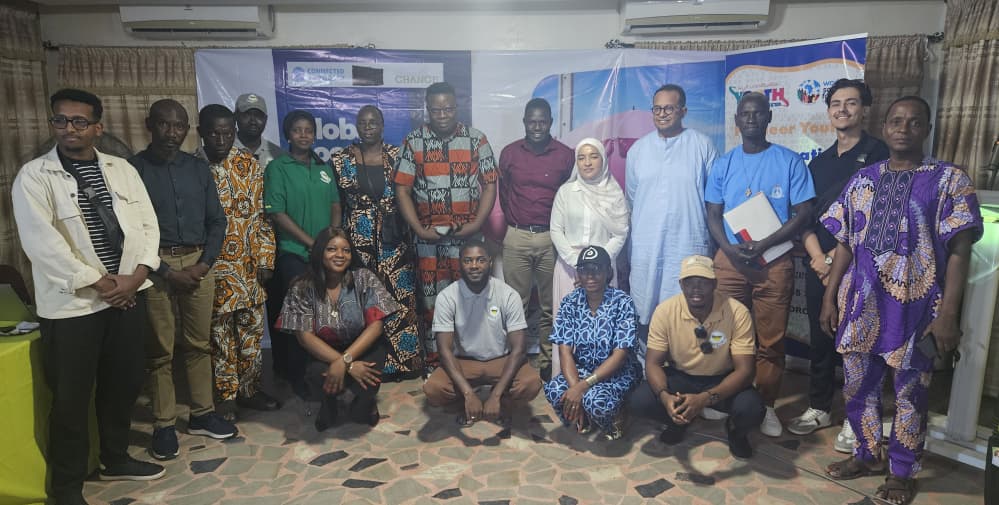
Global Localization Forum Concludes with Landmark Cotonou Declaration on Climate Justice, Humanitarian Action, and Energy Democracy, Cotonou, Republic of Benin , 5 August 2026.
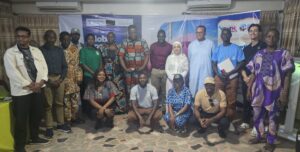
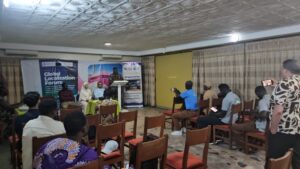
The Global Localization Forum: Africa Consultative Dialogue on Advancing Locally Led Climate, Humanitarian, Energy Access, and Environmental Action concluded in Cotonou, bringing together governments, civil society, youth‑led groups, indigenous peoples, humanitarian actors, academia, women’s organisations, faith institutions, private sector partners, networks and grassroots movements from across Africa and beyond. The event was convened under Connected Advocacy, Charter 4 Change Advocacy (Working Group and Climate and Environment Working Group).
The forum provided a platform for reflection, knowledge exchange, and collective action to strengthen locally led approaches to climate action, humanitarian response, environmental sustainability, and equitable energy access. Delegates adopted the Cotonou Declaration on Localization, Climate Justice, Humanitarian Action, and Energy Democracy, reaffirming a shared commitment to place communities at the centre of decision‑making, financing, implementation, monitoring, and accountability.
Participants acknowledged the interconnected crises facing the continent: climate change, biodiversity loss, environmental degradation, conflict, displacement, food insecurity, and energy poverty, and stressed that durable solutions require empowering local communities, indigenous peoples, women, and youth to lead interventions that affect their lives.
Key priorities in the Cotonou Declaration include:
- Increased direct financing for local organisations and community institutions
- Enhanced participation of women, youth, indigenous peoples, and marginalised communities in decision-making
- Investment in community‑led climate adaptation and resilience initiatives
- Expanded access to renewable energy and equitable energy systems
- Stronger multi‑sector partnerships among governments, development partners, civil society, academia, and the private sector
- Policies that promote local ownership, transparency, and accountability
- Mandatory capacity enhancement for local actors in policy influencing, advocacy and negotiation, diplomatic engagement, inclusive community organising, conflict management, transparent reporting, emergency response, and communications
Participants pledged to strengthen cross‑sector collaboration, promote innovation, facilitate knowledge sharing, and establish robust accountability mechanisms to translate commitments into measurable action.
To sustain momentum, the forum endorsed an implementation framework built around four mechanisms: 1. Annual Africa Localization Dialogue, 2. Continental Community of Practice, 3. Policy Monitoring and Accountability Mechanism, and 4. Knowledge and Learning Platform to document lessons, innovations, and indigenous knowledge systems
Speaking for the organisers, the forum secretariat described the declaration as a milestone in redefining relationships between global institutions and local communities. “Localization is not simply about shifting resources; it is about shifting power, strengthening trust, and recognising communities as architects of their own development and resilience,” the secretariat said.
The organisers thanked partners, speakers, volunteers, development organisations, and participating institutions for their contributions to the forum’s success.
As Africa confronts complex climate, humanitarian, environmental, and energy challenges, the Cotonou Declaration calls for collective action and renewed commitment to equitable, inclusive, and community‑led development pathways.
Delivered welcome remarks by Prince Israel Orekha. He emphasized that the primary output of the Forum will be a joint Communiqué and Policy Recommendations aimed at driving concrete progress on the localization agenda.
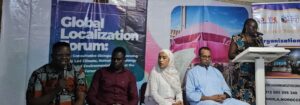
Speaking on the dialogue are Dr. Limam Boussif, President, Youth Pioneer Organization, Morocco. Who spoke on Localization, financing, and Resource Mobilization; other speakers are Onzima Dankan, Acting Executive Director at the South Sudanese Refugees Association (SSURA), Uganda, who spoke on the Barriers to direct funding for local actors; innovative financing mechanisms; donor commitments and accountability; last speaker Salma EL FERINI, Head of Qualification, Cultural, Artistic, and Sports Affairs, Youth Pioneer Organization, Morocco. She spoke on Experiences from frontline communities; youth and women leadership in climate and humanitarian action; indigenous and community knowledge systems. The lead moderator was Juliet Donna Eyokia, the Refugee Engagement & Policy Influencing Coordinator. At Woord en Daad in Uganda, Chineye Patrick-Biose also doubles as Connected Advocacy Youth Engagement Officer; co-moderator of the event, Prof. Richard Eshun Adjaye, Education Centre- Ghana, spoke on the flow of why capacity development as a local actor matters; Rokhaya Anna Sane of the USOFRAL Senegal, who emphasizes and shows the practical ways for innovative networking; the following made contrition to the input: Bakary Makalo United Youth for Sustainable Development The Gambia and Esther Atar, PrintriteFoundation for Sustainable Environment and Education (PFSEE), also available was Oluwayomi Oyebanji whose was strictly on private sector involvement for localization.